 The Way
To an Unknown God
To an unknown god
Story
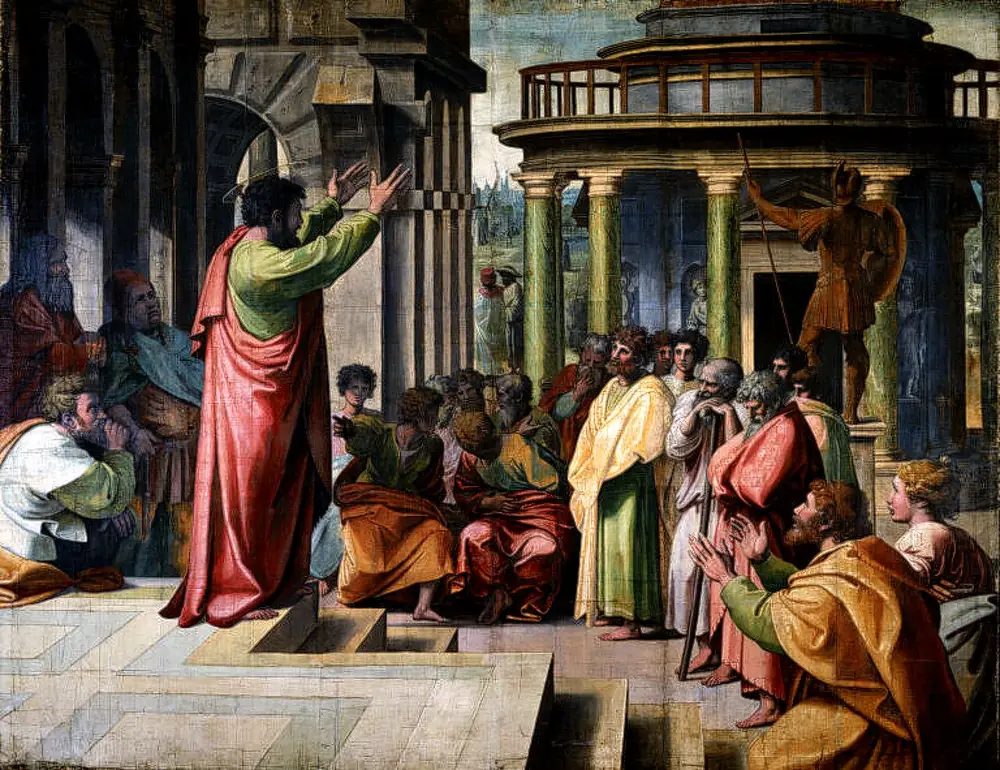
Brought to Athens by the brothers, Paul waited there for Silas and Timothy. When he saw that the city was full of idols, he was deeply upset. Paul talked with people in the synagogue, and every day in the marketplace with whoever was there. Epicurean and Stoic philosophers took him to the Areopagus, the hill where the council of Athens met. The philosophers asked, “What is this new teaching you are talking about?”
Paul stood up in the middle of the Areopagus and said, “People of Athens, as I walked around your city, I found an altar with the words: To an unknown god. Now I will tell you about the one you worship without knowing. The God who made the world and everything in it does not live in temples built by human hands.”
Paul went on, “In him we live and move and have our being. Now God commands all people everywhere to repent. He has set a day when he will judge the world by a man he has appointed, and he has given proof of this by raising him from the dead.” When they heard about the resurrection, some laughed at him, and others said they would hear him again. But Dionysius, a member of the Areopagus, a woman named Damaris, and some others believed.
Walk this scene on the map →Words of the Lord and of Paul
As I walked around and looked at the things you worship, I found an altar with the words: To an unknown god. The one you worship without knowing, I now make known to you.
God is not far from any one of us. In him we live and move and have our being.
God has set a day when he will judge the world with justice by a man he has appointed, and he has given proof of this to everyone by raising him from the dead.
The sayings are fresh renderings of the original meaning in today's language. Text: Acts 17:16–34
Background
Areopagus means “hill of Ares,” the god of war. It was a rocky hill northwest of the Acropolis, and also the name of the Athenian council that met there. The words Paul quoted next, “We are his offspring,” come from the poet Aratus.
Pause and Reflect
Do I tell people what they want to hear, or the gospel of repentance and resurrection?