 The Way
Mary
The voice that calls her by name
Story
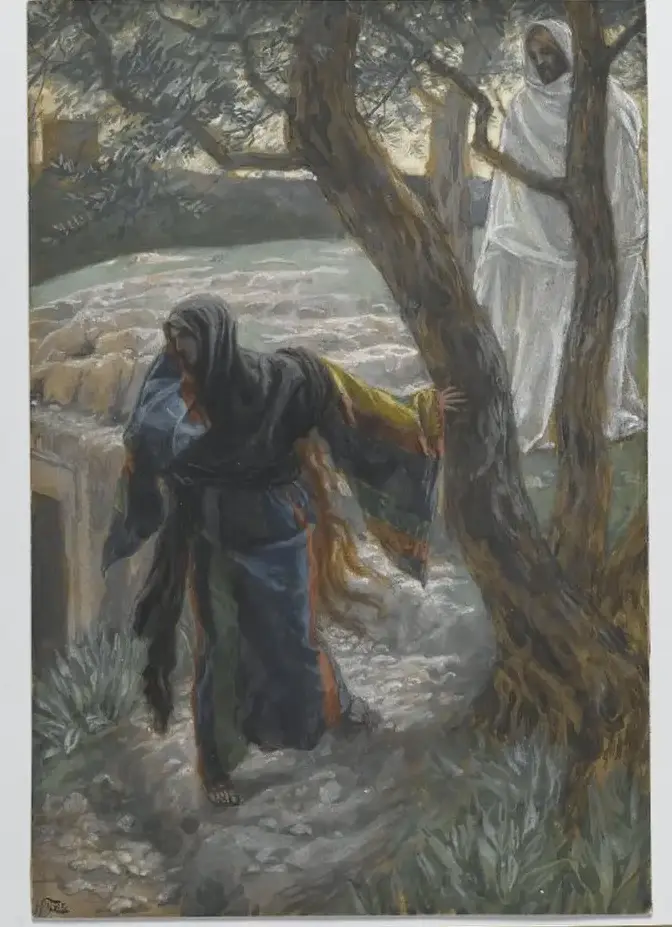
On the first day of the week, at dawn, while it was still dark, Mary Magdalene came to the tomb and saw that the stone had been moved from the entrance. She ran to tell them, and Peter and the beloved disciple came racing to the tomb, out of breath. Inside lay only the linen cloths, and the cloth that had been around his head was folded up in a place by itself.
Even after the disciples had gone home, Mary stood outside the tomb weeping. As she wept, she bent down to look inside, and there sat two angels in white, one at the head and one at the feet of where the body had lain. Woman, why are you weeping? Mary answered. They have taken my Lord away, and I do not know where they have put him. As she said this, she turned around and saw someone standing there. Blinded by her tears, she took him for the gardener.
Mary. A familiar voice called her name. Mary turned and cried out in Hebrew, Rabboni! which means Teacher. She ran to the disciples with the news. I have seen the Lord! On the morning of the resurrection, that joy began to spread from the lips of one woman.
Walk this scene on the map →His Words
Mary.
Woman, why are you weeping? Who are you looking for?
Do not hold on to me; I have not yet gone up to the Father. Go and tell my brothers: I am going up to my Father and your Father, my God and your God.
I have seen the Lord!
The sayings are fresh renderings of the original meaning in today's language. Text: Mt 28:1–10 · Mk 16:1–8 · Lk 24:1–12 · Jn 20:1–18
Background
Magdala was a fishing town on the western shore of the Sea of Galilee. Luke says Jesus drove seven demons out of Mary Magdalene, and that she supported Jesus and his companions out of her own means.
Pause and Reflect
Am I so lost in sorrow that I miss the hope the risen Lord gives?