 The Way
The Perfume at Bethany
A broken jar, and the fragrance of love filling the house
Story
On the evening six days before Passover, a dinner was held in Bethany, the hillside village east of Jerusalem. Lazarus, who had died and come back to life, sat at the table with the guests, and Martha bustled about serving the food. Mark tells us this dinner took place in the house of Simon, who had once had leprosy. Beneath the lamplight, the talk went back and forth in low voices.
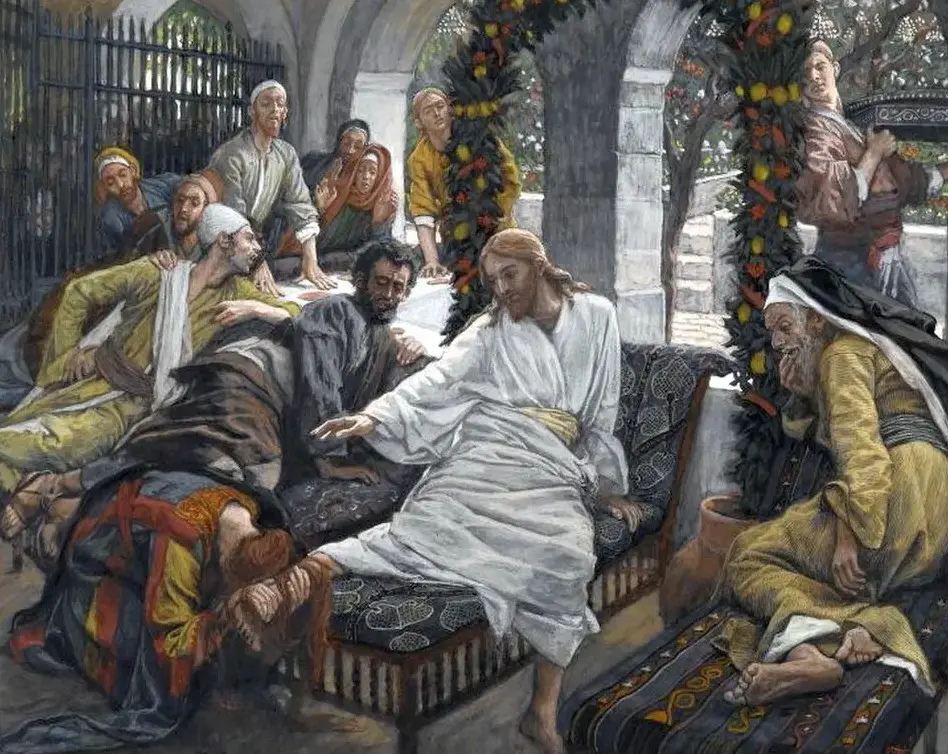
Then Mary came in quietly, holding close an alabaster jar with a pound of costly pure nard. She broke the jar and poured the perfume over Jesus' head, then poured it on his feet too and wiped them with her loosened hair. The heavy fragrance filled the whole house. People held their breath, and no one dared to speak first.
This perfume could have been sold for three hundred denarii. Why wasn't it given to the poor? The sharp voice of Judas Iscariot broke the silence. He said this not because he cared about the poor, but because he kept the money bag and used to help himself to what was put in it. Jesus came to the woman's defense. Leave her alone. She has kept this for the day of my burial. The poor you will always have with you, but you will not always have me.
Walk this scene on the map →His Words
Leave her alone. Why are you troubling her? She has done a beautiful thing for me.
She did all she could. She has anointed my body ahead of time for its burial.
The poor will always be with you, but you will not always have me.
Listen closely. Wherever the good news is told in all the world, what she has done will be told too, and she will be remembered.
The sayings are fresh renderings of the original meaning in today's language. Text: Mt 26:6–13 · Mk 14:3–9 · Jn 12:1–8
Background
Nard was a precious perfume drawn from the root of a plant that grows in the Himalayas. A day's wage was one denarius, so three hundred denarii was a fortune, nearly a full year of a laborer's work.
Pause and Reflect
Am I weighing gain and loss before my love for the Lord?