 The Way
I Appeal to Caesar
Like me, except for these chains
Story
When the new governor, Festus, arrived, the chief priests asked him to have Paul brought up to Jerusalem. They planned to lie in wait and kill him on the way. Festus held the trial in Caesarea. They brought many serious charges, but they could not prove any of them. Festus asked Paul, “Are you willing to go up to Jerusalem and be tried there?” Paul answered, “I appeal to Caesar, the Roman emperor.”
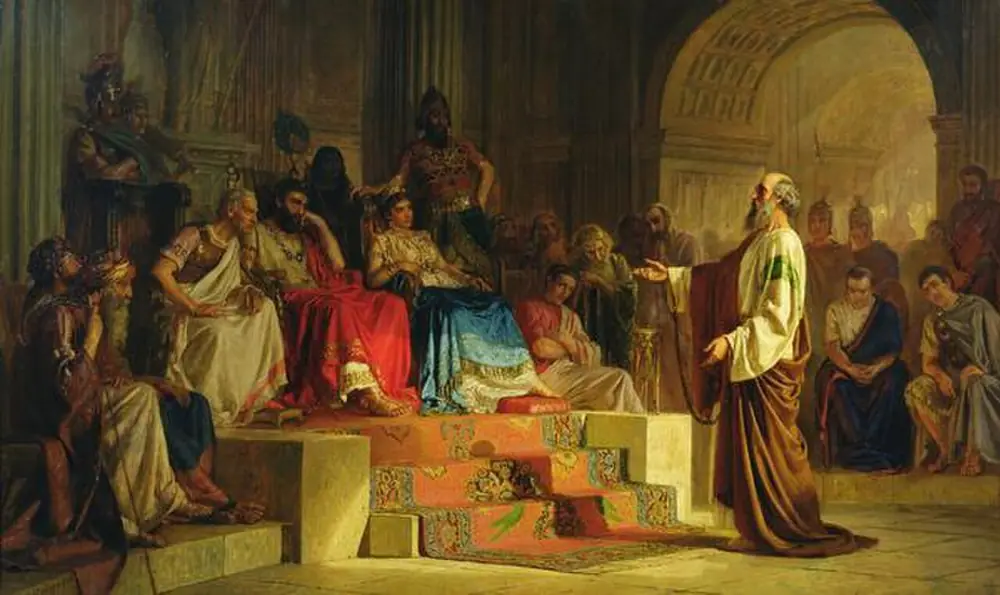
Festus said, “You have appealed to Caesar. To Caesar you will go.” A few days later King Agrippa, who ruled lands north of Judea, came with his sister Bernice to pay their respects to Festus. Some time later the two entered the audience hall with great pomp. Before the king, Paul told about the light and the voice he met on the Damascus road. Festus shouted, “Paul, you are out of your mind! Your great learning is driving you mad.”
Paul said, “I am not out of my mind, most excellent Festus. What I am saying is true and reasonable. King Agrippa, do you believe the prophets? I know you do.” Agrippa said, “Do you think that in such a short time you can persuade me to be a Christian?” Paul said, “Short time or long, I pray to God that not only you but all who hear me today may become what I am, except for these chains.”
Walk this scene on the map →Words of the Lord and of Paul
King Agrippa, I was not disobedient to the vision from heaven.
Short time or long, I pray to God that not only you but all who hear me today may become what I am, except for these chains.
This man could have been set free if he had not appealed to Caesar.
The sayings are fresh renderings of the original meaning in today's language. Text: Acts 25:1–26:32
Background
A Roman citizen could refuse a trial before a provincial governor and ask to be tried by the emperor himself. Agrippa II was the last king of the house of Herod. At that time he also had the power to appoint and remove the high priest in charge of the temple.
Pause and Reflect
Even in a hostile place, can I confess Jesus without shame?